

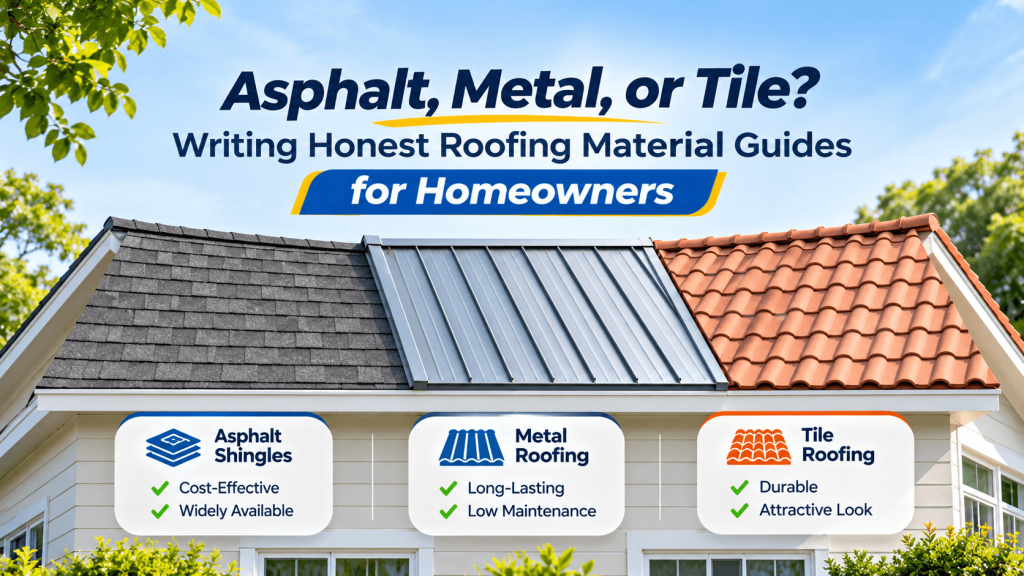
A homeowner in Denver needs a new roof after twenty years and keeps hearing conflicting advice. One neighbor swears by metal, another says architectural shingles are all anyone needs, and a salesperson pushes a premium product she’s never heard of. When she finds a local roofer’s guide comparing common materials side by side, with honest pros and cons for her climate, she finally feels ready to schedule estimates.
Material choice is one of the biggest decisions in a roof replacement. A balanced comparison guide helps homeowners understand the trade-offs and shows that your company gives straight answers.
Materials Worth Covering
Cover the options homeowners in your area actually consider:
- Asphalt shingles, including three-tab and architectural styles
- Metal roofing, such as standing seam and metal shingles
- Clay and concrete tile
- Synthetic or composite products
- Flat or low-slope options, such as TPO or modified bitumen, if you install them
Focus on the materials you actually install and service, and say so clearly.
Compare the Factors Homeowners Care About
For each material, explain typical lifespan ranges, upfront cost compared with other options, appearance, weight, maintenance needs, and how it performs in local weather, such as hail, heavy snow, high winds, or intense sun.
Be honest about uncertainty. Lifespans depend on installation quality, ventilation, climate, and maintenance, so present ranges rather than guarantees. If you mention impact or wind ratings, explain what they mean, and note that some insurers offer premium discounts for certain impact-resistant products, which homeowners should confirm with their own insurer. A simple comparison table near the top of the page helps readers who want a quick overview first.
Help Homeowners Take the Next Step
End the guide with practical next steps: checking HOA rules or local codes, getting an inspection, and comparing written estimates that list the same materials and scope. Link to your roof replacement page and a gallery of completed projects.
Directories also help homeowners compare contractors. A general directory such as Urban Listings includes a Roofing category where homeowners browse local roofing companies, and it shows how others describe the materials they install. Mention your main materials in your listing description and keep contact details consistent.
A common mistake is presenting the most expensive option as the best choice for every home.
Guide Homeowners to the Right Fit
There’s rarely one perfect roofing material for every home. Compare options honestly, explain local factors, and connect your guide to your website, profile, and listings, including on Urban Listings, so homeowners can move confidently to an estimate.
Frequently Asked Questions
How long do different roofing materials typically last?
Lifespans vary widely with product quality, installation, ventilation, climate, and maintenance. Asphalt shingles generally last fewer years than metal, tile, or slate, but exact ranges differ by product. Share manufacturer information and your own local experience, and avoid presenting any number as a guarantee.
Should a material guide include prices?
General comparisons, such as which materials usually cost more upfront, help homeowners plan. Exact prices depend on roof size, pitch, tear-off needs, and local labor costs, so if you share ranges, date them and explain that a written estimate after inspection sets the actual price.
Are impact-resistant shingles worth it?
In hail-prone areas, impact-resistant products may reduce the risk of damage, and some insurers offer premium discounts for them. Benefits depend on the product, installation, and storm severity, so encourage homeowners to check with their insurance company and compare costs before deciding.
Do HOAs restrict roofing materials?
Many homeowners associations have rules about roofing materials and colors, and some cities have historic district requirements. Encourage homeowners to check HOA guidelines and local regulations before choosing. Some states also limit what HOAs can restrict, so local rules make a real difference.