

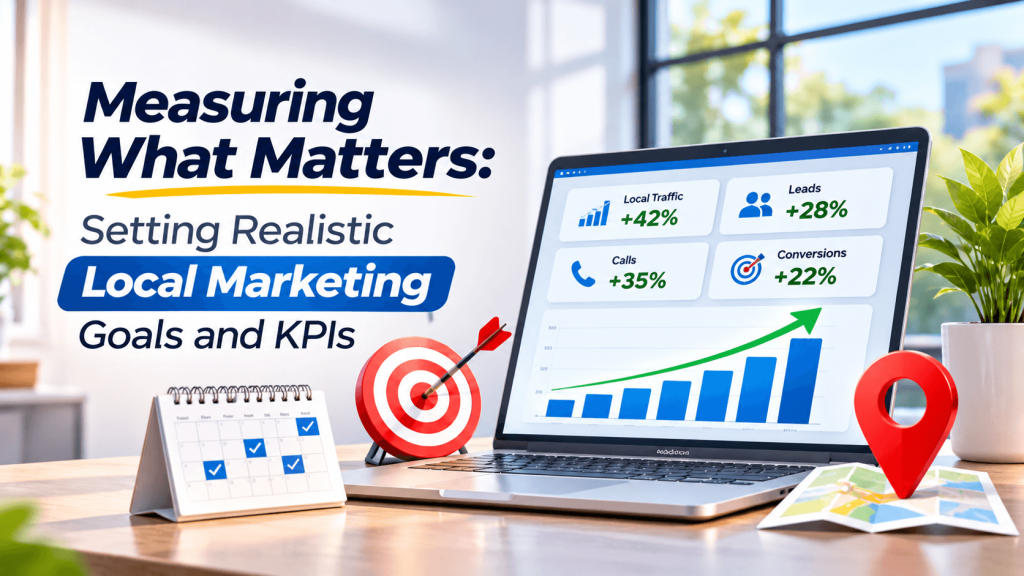
A family-owned pest control company in Tampa hires a marketing agency and receives monthly reports full of charts: impressions, keyword positions, social reach. The owner can’t tell whether the phone is ringing more because of any of it. When the agency switches its reports to focus on calls, booked jobs, and cost per lead, the conversation finally makes sense.
Marketing works best when everyone agrees on what success looks like. Realistic goals and clear key performance indicators, or KPIs, help small businesses and their marketing partners make better decisions.
Start With Business Outcomes
Most small businesses care about a few core outcomes:
- Phone calls and form submissions from new customers
- Booked appointments or jobs
- Revenue from new customers
- Repeat business and referrals
Work backward from these outcomes to choose the marketing metrics that connect to them, such as Google Business Profile calls, website conversions, or lead sources reported by customers.
Use Supporting Metrics Carefully
Metrics like impressions, rankings, and traffic can show whether visibility is growing, but they don’t always lead to customers. Treat them as early signals rather than goals in themselves. Seasonal businesses should also compare results with the same period last year, since a slow month may simply reflect normal seasonal demand rather than a marketing problem.
Set realistic timelines. Paid campaigns can produce leads quickly, while improvements in organic visibility often take months and depend on competition. Avoid goals tied to guaranteed rankings, which no one can honestly promise.
Build a Simple Reporting Routine
A monthly one-page summary often works better than a long report. Include leads by source, booked jobs, costs, and a short note on what changed and what’s planned next. Keep the format the same each month so trends are easy to spot.
Directories and listings can be part of that tracking. A general directory such as Urban Listings includes an SEO, SMO and PPC category where businesses compare marketing agencies and consultants, and it shows how providers describe their reporting and services. If you track referral traffic from listings, include it in your summary.
A common mistake is changing strategy every month before there’s enough data to judge results.
Focus on Results You Can Act On
Good marketing goals connect directly to business outcomes. Choose a few meaningful KPIs, set realistic timelines, review results consistently, and keep your profiles and listings, including on Urban Listings, accurate so every lead source can be measured fairly.
Frequently Asked Questions
What KPIs should a small local business track?
Focus on calls, form submissions, booked jobs, cost per lead, and revenue from new customers. Supporting metrics, like website traffic and Google Business Profile views, help explain trends. Choose a small set you can review consistently rather than trying to track everything at once.
How long should we wait before judging marketing results?
It depends on the channel. Paid ads can show early results within weeks, while SEO and content often take several months. Set review points in advance, such as monthly check-ins and a quarterly assessment, so decisions rest on enough data to be meaningful.
Are keyword rankings a good marketing goal?
Rankings can indicate visibility, but they shouldn’t be the main goal. They fluctuate, vary by location and device, and don’t always lead to customers. Track rankings as a supporting metric while keeping your focus on leads, booked jobs, and revenue.
How can we tell which marketing channel brought a customer?
Use a mix of methods: call tracking, website analytics, unique offer codes, and simply asking customers how they found you. No single method is perfect, so combining them gives a clearer picture of which channels actually deliver paying, returning customers.